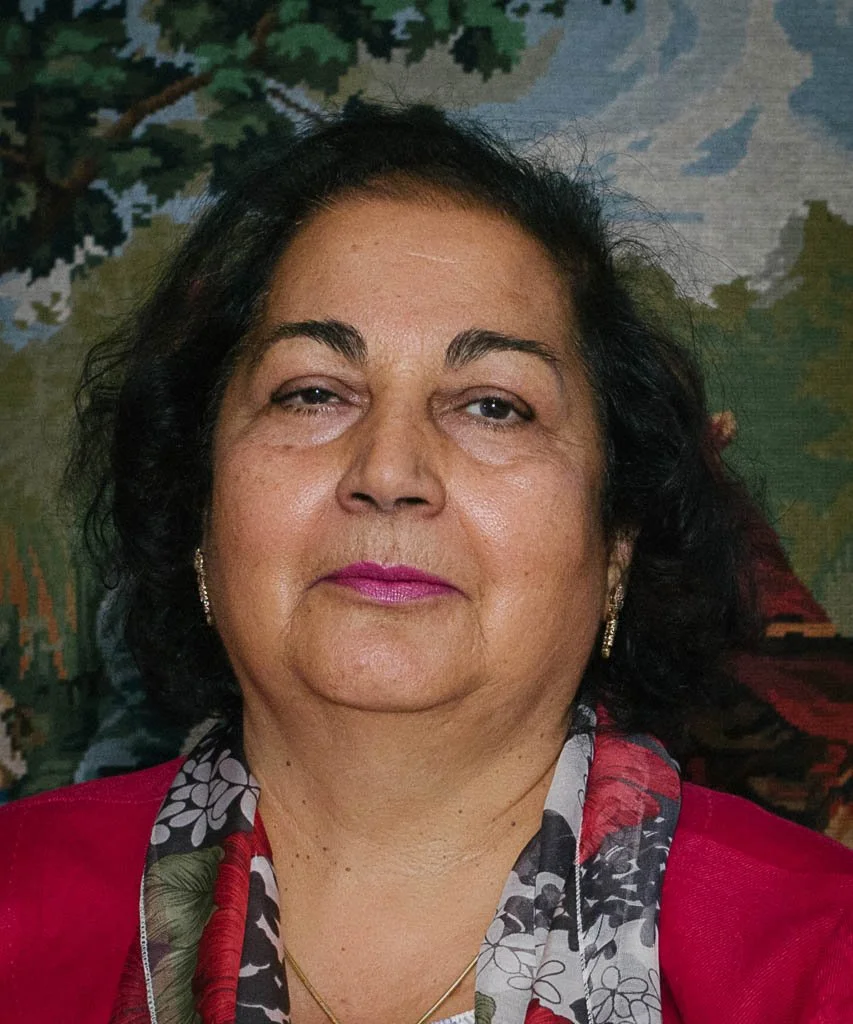
Roger Tanner
Q1. Could you sketch the immediate context that brought you into recent public history work?
I was invited to contribute to a Nottingham Trent University student project on the legacies of May ’68. The students filmed interviews with me and my wife Tina, who had helped seed early women’s movement activity in Nottingham in the 1970s. Their exhibition surprised me: it centred non-Euro-American geographies—Japan; Pakistan/Bangladesh’s formation; Vietnam; anti-racist struggles—while linking these to feminist beginnings. They worked across media (banners, cartoon strips, static works) and animated our voices. They also drew on the experiences of George and Jill (Jill Westerly) around the Anti-Colour bar campaign against racist pub practices. The outcome captured atmosphere and politics more deftly than I expected from a younger cohort.
Q2. What was the Anti-Colour bar campaign and how did it operate?
The Anti-Colour bar campaign coalesced in Nottingham in 1967–68, though it drew on tactics used earlier in St Ann’s during 1962–65. The immediate flashpoints were pubs, most notoriously the Mechanics Arms on Alfred Street North where the landlord enforced informal segregation. The response blended direct action and coalition building: sit-ins, collective entries in mixed groups, deliberately sharing drinks across racial lines, and publicity campaigns. Afro-Caribbean activists such as George Powell and “Decka” (Dick Skye), Asian organisers like Mohammed Aslam, and white allies (students, trade unionists, CND activists) worked together to change the landlord’s behaviour.
Q3. How did 1968 shape Nottingham’s anti-racist repertoire?
1968 functioned as an accelerant. White student allies brought CND-honed nonviolent direct action. When Enoch Powell visited Nottingham after 'Rivers of Blood,' the coalition prioritised embarrassment and disruption—marching, egg-throwing, and blockages that forced an ignominious exit. The aim wasn’t only to stop a meeting; it was to stage a counter-public that made racism untenable in civic space.
Q4. Which organisations and personalities were pivotal?
Beyond Powell and Decka, key figures included George Paradox/Parady, Margaret Gardner, Henri McLean, Ray Gosling, Bob Gregory, Chris Preston, Benny Bunsee, Mohammed Aslam, Brian Clough, Morris L., Gerry Gable, Ken Coates, Jack Charles, Mickey Shore, J.R. Forbes, Wood Cash, John Stroud, Yaffe, P.S. O.G.S. Jehol, Dr. Carlton, Maqsood, Ahmed Titan.
Q5. What was the relationship between anti-racist street work and workplace struggles?
In the late 1960s and early 1970s, workplace militancy by Black and Asian workers became central. There was a sequence: the National Hosiery Strike, Mansfield Hosiery, and then Imperial Typewriters (Leicester, 1974). I spent time in Leicester at the start of the Imperial strike, supporting families with benefits and helping coordinate solidarity. Locally, Black People’s Freedom Movement (BPFM) anchored support. By 1974, as industrial actions waned in Nottingham, focus shifted to anti-fascism (pre-ANL), countering the National Front surge radiating from Leicester and Birmingham.
Q6. How did the anti-fascist infrastructure evolve into and beyond the ANL?
Before the ANL (1977–78), regional Anti-Fascist Committees existed—Nottingham to Newcastle—coordinating responses wherever the NF appeared. The Searchlight milieu (Morris L. and Gerry Gable) with Jewish anti-fascist roots produced intelligence materials. Rock Against Racism mobilised youth culture; in Nottingham, we ran RAR gigs and a forest concert (1978). Brian Clough’s endorsement helped thousands of 'Forest Against the Nazis' badges circulate. The ANL’s machine was glossy and top-down; it achieved reach but risked simplification. Parallel campaigns like the Campaign Against Racist Laws were needed to keep structural racism visible.
Q7. You mentioned pamphleteering and print culture. How did that function politically and aesthetically?
The 1970s were a boom time for DIY print: duplicated bulletins, broadsheets, cartoons, badges—vernacular graphic design as pedagogy. We produced Anti-Fascist Convention pamphlets, pieces on racism in unions, Mansfield Hosiery, Imperial Typewriters, and countless leaflets. Costs shaped form; art and agitation blurred. RAR linked sound to politics, but poetry readings, community theatre, and cartoon strips also featured. This was civic pedagogy by other means.
Q8. What local infrastructures supported Black and Asian community organising?
Venues were scarce in the 1960s—upstairs rooms in pubs, makeshift gatherings, Blues parties. By the 1980s, the Afro-Caribbean Centre, Pakistani Centre, and Indian Community Centre opened, rooted in long inter-community cooperation with George Powell pivotal again. After the 1981 uprisings, state funding expanded community sectors, raising debates about co-optation versus capacity.
Q9. How did transnational currents inflect local struggles?
The diasporic and anti-imperialist circuits were tangible. A key case: Raleigh factory’s employment of Black workers post-1958 linked to Caribbean dockers, Michael Manley, and global boycotts of South African goods after Accra conferences. Dockside boycotts forced Raleigh negotiations. American currents (Malcolm X, Black Panthers, George Jackson, Angela Davis) reframed discourse toward Black self-defence and power. Nottingham activists like Decka articulated this, while local campaigns remained coalitional.
Q10. What were your routes through organisations and cities?
I came to Nottingham as a student in 1968, left and returned, worked locally, and later trained in Birmingham (1973–74). There we helped reconstitute the Birmingham Campaign Against Racism amid NF presence and briefly intersected with the Bangladeshi Workers’ Movement. Back in the East Midlands, I supported the Imperial Typewriters strike, then returned to Nottingham’s Anti-Fascist Committee, eventually navigating the ANL relationship.
Q11. How did music and culture feed organisation across the decades?
In the 1960s, folk protest and soul/Motown were ambient. In the 1970s, reggae carried affective weight; punk/RAR catalysed youth. There were readings, plays, and later big ANL/RAR spectacles. The Eric Clapton racist outburst became a negative foil provoking Rock Against Racism.
Q12. What patterns of surveillance and infiltration did you observe?
Some IMG names surfaced in the Undercover Policing Inquiry. The Searchlight circle used informant networks against fascists; we assumed meetings might be watched. Visibility was both weapon and risk.
Q13. Tell us about archiving: where are these materials and how accessible are they?
It’s fragmented. Trades Council minutes are at the University of Nottingham archives; Communist Party, union fonds, and Institute for Workers’ Control are there too. City Archives have holdings but are less navigable. Women’s Centre materials are being transferred. Private caches circulate. I keep folders on Colour bar, strikes, and anti-fascism and have written local labour histories.
Q14. Can you identify under-acknowledged actors and moments?
Mickey Shore (Trades Council, 1950s) introduced one of the first anti-colour bar motions. Early St Ann’s pub confrontations (1962–63) prefigured Mechanics Arms actions. The Raleigh settlement’s dependence on dockside boycotts across Jamaica, India, and elsewhere is rarely foregrounded.
Q15. How did you experience intergenerational change and, later, ageing as an activist?
The letting-go problem is real. Some elders struggled to yield space. My adaptation has been to contribute memory without presuming authority. Older bodies have limits on marches. The role becomes custodial and pedagogical: curate archives, tell stories, connect struggles.
Q16. How do religion and family histories intersect with your politics?
My father in South Wales drew meaning from chapel; I’m not religious but recognise faith infrastructures. Our home housed Nigerian students despite racist lodging signs. We celebrated Nigerian independence in 1960. Family lines also run into empire: another grandfather left Derby railways to be a missionary in India c.1900. These entanglements with empire formed my anti-racist baseline.
Q17. Looking back, what do you see as the through-line across pub campaigns, strikes, and anti-fascism?
The constant is coalition practicalities: Black and Asian leadership setting stakes; trade unions and students providing bodies and leverage; direct action engineered for visibility; transnational linkages converting local grievances into structural pressure. The repertoire evolved, but the grammar remained: make racism costly, make solidarity visible, keep the narrative in motion.
Q18. Where do you want this history to land now?
I want usable history: discrete case studies with faces and names on walls—Mickey Shore, George Powell, Decka, Henri McLean, Margaret Gardner, and others. Visual genealogies should show interlocking struggles as civic projects rooted in universal human rights. That means scanning and annotating materials, mapping relations, and creating educational scaffolds.
Q19. Any final reflections on method for researchers, curators, or students?
Three suggestions: (1) Read the minutes—Trades Council, cross-referenced to press and ephemera. (2) Follow the networks—dock unions to factory floors, May ’68 to Nottingham pubs. (3) Honour vernacular art—pamphlets, badges, cartoons, set-lists were aesthetic labour. Above all, keep the coalition lens: Nottingham’s story is about Black and Asian leadership joined by trade unionists, students, feminists, and faith-adjacent actors, improvising tactics that linked local struggles to global circuits.