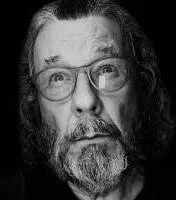
Derrick Bishton
My involvement really began in the mid-1970s. After leaving university, I trained as a journalist and worked in Newcastle before moving to Birmingham to work at the Birmingham Post and Mail. While working there, I became involved in what you might call Birmingham’s alternative press scene, particularly Grapevine magazine, through people like Brian Homer and Krishna Fisher.
When Grapevine folded in the mid-1970s, I had already left the Post and Mail and was looking to do more politically engaged community work. I briefly worked as press officer at the Birmingham Marxist Library. At the same time, Brian and I were developing the idea of creating an alternative design and production agency to support inner-city community groups, particularly in Handsworth.
At that time, Handsworth had a dense network of politically active organisations: action centres, advice centres, the Asian Resource Centre, Apple, AFO, and WELD, among others. These organisations needed reports, publications, and visual material for funders such as Cadbury Trust and the Catholic Church. We began offering those services collectively.
In 1977 we formalised this work, and in early 1978 we took over a small, run-down property on Grove Lane, which became our studio. John Redmond later joined us as a photographer. From that base, we produced a wide range of reports and publications, including Talking Blues for Apple and Move With the Job People, which emerged partly as an educational resource for magistrates dealing with young Black defendants.
Photography became important almost accidentally. Brian already had experience, but I learned through proximity to the WELD project, which had a community darkroom. Many of the groups we worked with needed photographs for their publications, so we started producing them ourselves.
This led us to think more critically about representation—how inner-city areas and communities were depicted, and who controlled those images. We joined with others to apply for funding from West Midlands Arts, initially seeking gallery space. Instead, we received funding for a magazine, which later evolved into gallery practice, including the Triangle Gallery in Digbeth.
WELD was distinctive in its structure. It operated as a form of local democracy, with residents actively involved in decision-making. It originated through teachers—both Black and white—who were politically engaged and recognised unmet needs during school holidays.
When an old school building became available, they persuaded the Bishop of Birmingham to grant a lease. The project developed organically through consultation with local residents, offering provision for women, children, and young people. Classes, dance, music, photography, and sound system culture all coexisted.
My literacy group at WELD met weekly and developed strong collective bonds. This relational aspect was key to its success and to the eventual production of All Hands Together.
Across all these projects, openness was fundamental. Working with minimal resources required inclusive structures that allowed people to enter, contribute, and feel ownership. Without that, projects stagnated.
Many of us were shaped by late-1960s student movements and felt a responsibility to work at grassroots level. The political ethos was about empowering people to take control of their own lives outside conventional political institutions.
The 1970s are often remembered negatively, but in reality they were a period when the ideals of the 1960s were enacted locally—in community centres, education projects, and cultural spaces.
One overlooked factor in Handsworth’s vibrancy was the role of funders like Cadbury Trust. Their trust-based approach—minimal bureaucracy, emphasis on relationships—enabled experimentation.
After the uprisings, many of these community-led structures were absorbed into bureaucratic systems or undermined by policing and funding shifts. The erosion of autonomous spaces significantly altered the landscape.