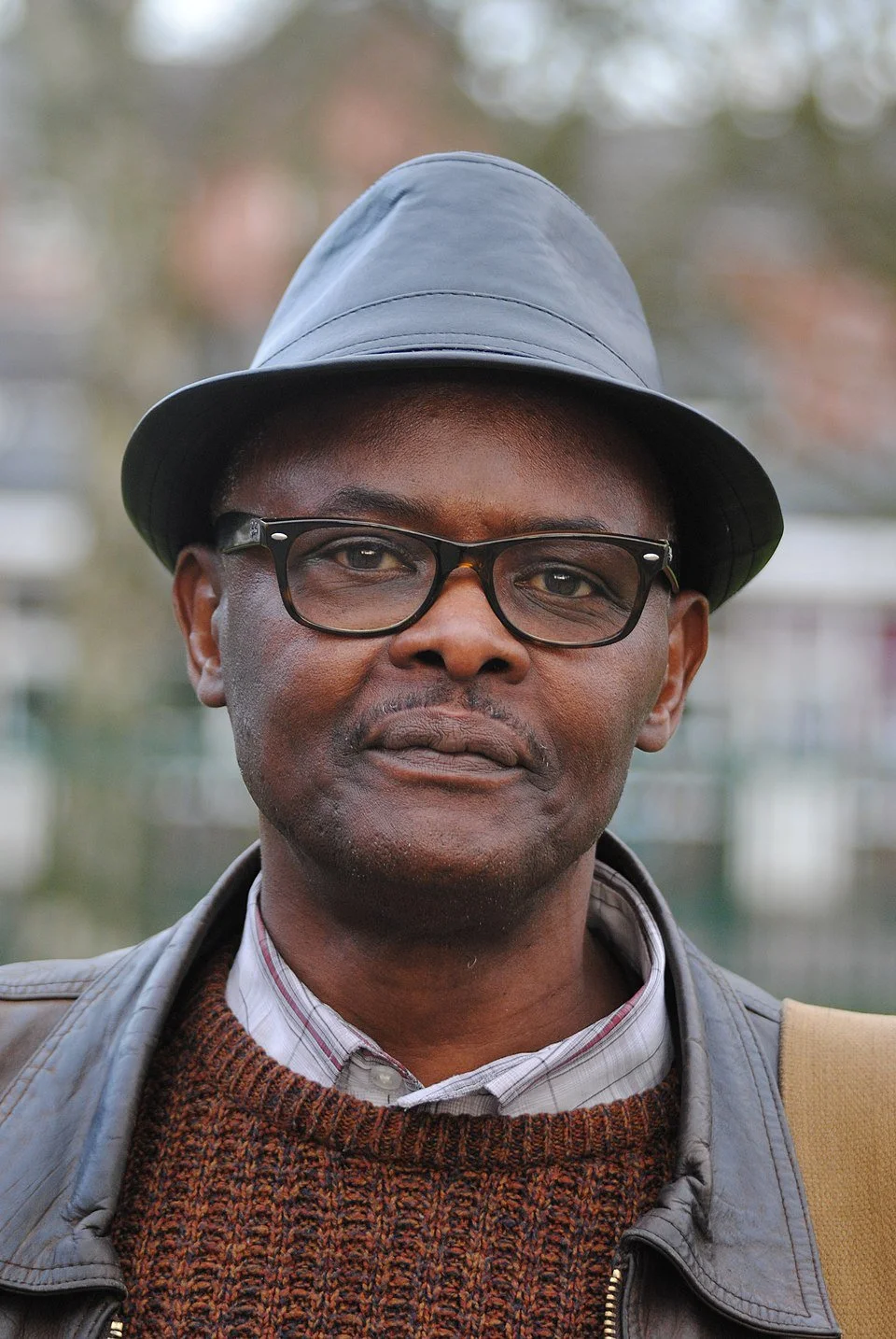
Vanley Burke
Vanley Burke – Photographer, Archivist, Community Artist
Let’s begin with your background. Where did you grow up, and how did you first get involved with artistic practices?
Vanley Burke: I was born in Jamaica. Like many others, I was one of the children left behind when my parents migrated to England in the 1950s. My mother came to study nursing and eventually settled in Handsworth, Birmingham. When I was about 15 or 16, I came to join my parents in the UK. Before that, I had already been drawn to making things — I wouldn’t have called it “art” then, just creativity. I received a small Kodak Brownie 127 camera in one of the parcels sent from England. That’s how my fascination with photography began.
When did you begin to think of photography as documentation?
Burke: Arriving in England and experiencing that shift made me reflect. I began photographing the Black British experience — though I wouldn’t have called it that at the time. I just wanted to capture the lives of people around me, especially as they were being so misrepresented in the media. Soon I realised I was documenting history. I felt I had a unique opportunity to observe the arrival and settlement of Black people in Britain, and I wanted to make sure that these experiences were preserved.
When did you start actively building your archive?
Burke: Not long after I arrived in England. I started taking photos, converting my parents’ coal shed into a darkroom, and collecting material — photographs, leaflets, posters, magazines. I realised that for every image I captured, there were many more I couldn’t. So I began to collect and preserve whatever related to Black life in Britain. I broke the archive down into themes — education, housing, health, birth, death, social life, political struggle — and worked under those headings. My goal was to document a full life cycle.
Did you receive formal training in photography?
Burke: Yes, I studied at the Birmingham School of Photography in the early ’70s, and later worked as a technician at the Birmingham College of Art and Design. I also worked across several departments: art education, visual communication, computer graphics. I was often the only Black student in my classes. There weren’t many Black or Asian photographers at that time.
Interviewer: Your work often goes beyond galleries. Can you tell us more about showing work in the community?
Burke: I’ve always shown my work in community spaces — pubs, barbershops, cafés, church halls. I once insisted that the BBC film an exhibition not in a gallery but in a community pub in Handsworth. That connection is vital. For example, a local shop owner told me that a group of men spent two hours discussing the photos on his wall. That’s what art should do — spark reflection in the spaces where people live their lives.
Did you ever join artist collectives or political organisations?
Burke: Briefly, I was involved in the African Caribbean Self Help Organisation, but I’ve mostly worked independently. I felt I needed objectivity. People would ask, “Who are the photographs for?” There was suspicion — rightly so, given surveillance at the time. I wanted to retain full control over my work and its interpretation.
Were you aligned with the Black Arts Movement?
Burke: I didn’t label myself. People started calling me a “documentary photographer,” or an “artist,” and I went with it. But I never set out with those labels in mind. I was responding to my environment. When Marlene Smith once asked if I considered myself part of the Black Art Movement, I said: “I just produce.” I wasn’t interested in categorisation. That said, I understood why people used the term "Black art" — as a political assertion of identity and voice.
You’ve mentioned documenting other communities too?
Burke: Yes, I’ve photographed South Asian communities — Sikhs, Muslims, Hindus — but that work isn’t widely known. I never believed you could document just one community. Life is shared. The Indian Workers’ Association and Caribbean groups often worked side by side.
What has the public response to your work been?
Burke: One white visitor to my MAC exhibition said, “I’ve never seen my experience reflected in a gallery before.” That meant a lot. The exhibition wasn’t about race — it was about a shared lived experience. I believe art is more powerful when it reflects truth — not when it fits a simplified narrative. Much of it is now at Birmingham Library. After a fire destroyed some material, I accepted an invitation to house it there, though I maintain control. We received HLF funding and hired two archivists. A lot is now catalogued and accessible online, but there’s still a lot left to do.
The archive includes photos, magazines, posters, clothing, furniture, vinyl, even Angela Davis t-shirts. I document both presence and absence — the programmes we were part of, and the ones that excluded us.
What’s next for you and the archive?
Burke: I admire the Schomburg Center model in New York — independent but connected to a public institution. I want my archive to live, to educate, and to remain rooted in the community it represents. But I also need to think about succession — who carries it forward, and how it grows.
I’ve always said: I don’t promote my art. I let it promote me. My work has always come from the community, and it returns to them. Whether it’s a gallery or a takeaway café — if the work resonates, then it’s doing its job.
Facilitator Notes
Length & Adaptation: The transcript can be edited for time. You may choose to use portions (e.g. sections 1‑4) for shorter lessons.
Discussion Emphasis: Focus on themes like identity, community, migration, memory, art and objectivity, public vs private spaces.
Activities: Use paired or small‑group reflection; ask students to bring photographs from their own lives and share what they would preserve.
Classroom Discussion Questions
How does Vanley Burke use photography to document experiences often ignored by mainstream media?
What does the archive (books, flyers, clothing, etc.) tell us about daily life, identity, and culture?
What is the role of independence (“working outside institutions”) in Vanley Burke’s practice?
How do community spaces (pubs, shops, barbershops) change how art is received?
What challenges are there in preserving and sharing such archives? Why might stories be “filtered” or changed over time?