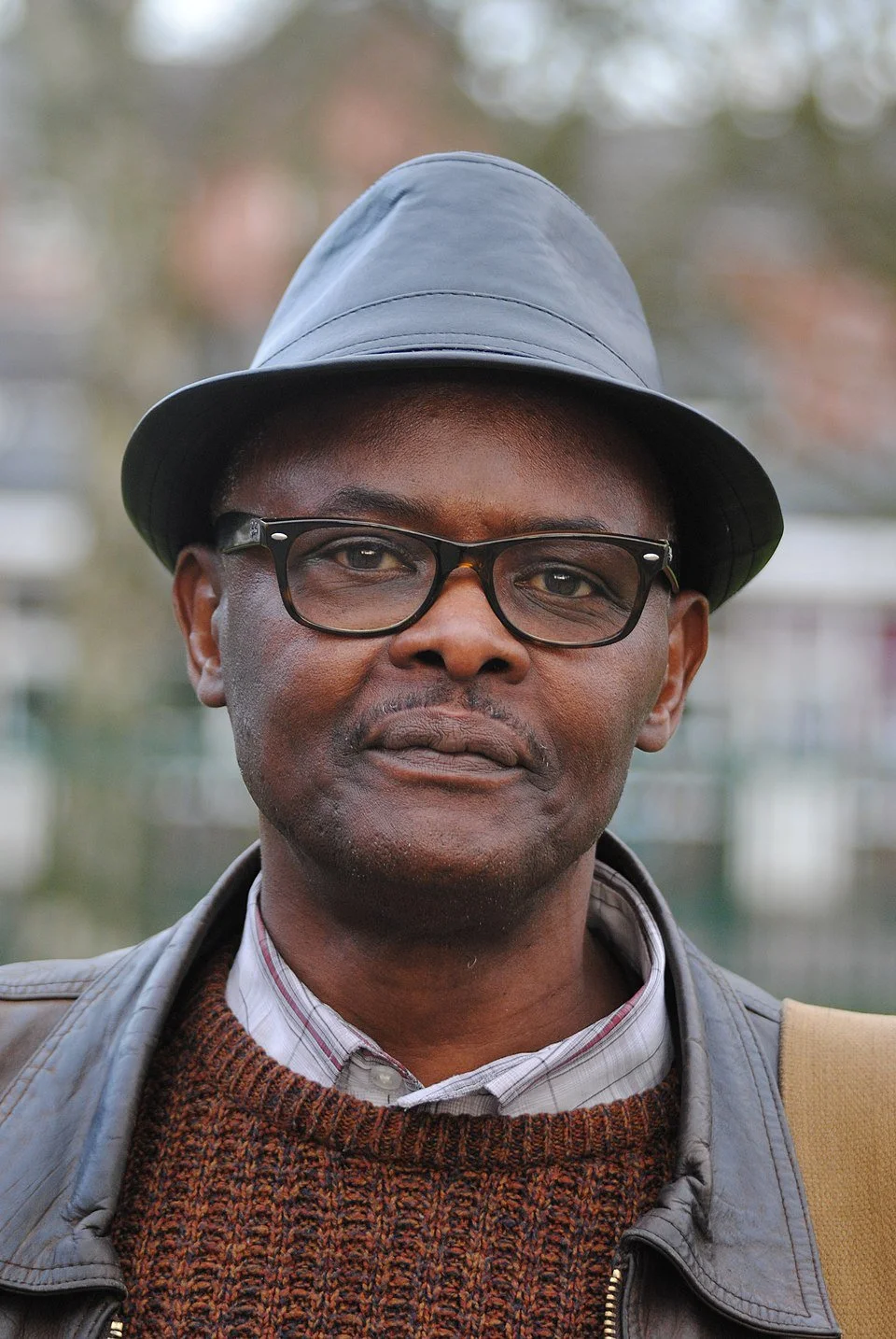
Rajinder Dulai
To start, could you tell us a bit about how you came to the UK and your initial involvement with the Indian Workers’ Association (IWA)?
Of course. I arrived in the UK in December 1978, just shy of 17 years old. I joined the IWA through relatives who were already involved. Around that time, the community welfare centre had just opened, and from then on, I was immersed in the organisation’s work — both political and cultural.
What was your background before coming here? Did you grow up in a politically active environment?
Not at all. I came from a fairly average Punjabi farming family — not political. I’d studied up to the tenth class in India, and hadn’t been exposed to activism. Only when I joined IWA did I begin to read — especially Marxist literature — and learn about class politics, struggles of the working class, and broader leftist ideology. Working in factories here became a sort of extension of that, seeing similar patterns back home in terms of labour and exploitation.
At what point did your involvement with theatre and cultural work begin?
That began even before the formal theatre group was established by IWA. There were already people in the community who were doing dramatic performances: Surinder Veri Shiro, Puguand, Tasin Tara, and others. I joined them, saying: “I’ll do whatever needs to be done.” In 1983, after collaborating with visiting artists, we formed our own drama group.
Did you collect photographs, scripts, or archival material?
N: Yes—and there is a lot more to gather. I’ve shared a few photos—some were used for posters. But Padant has many more: hundreds of photos and video footage. I think he has constant documentation of plays, rehearsals, and public performances. It’s essential to bring him into this archival effort.
Who were some of the major influences — people, writers, performers — in your journey?
Several. Gushan Singh: He was a major force in Punjabi theatre, especially “street theatre” — minimal props, no fancy stage, just powerful stories. His arrival in the UK in 1983 was a turning point. He inspired many of us, taught us styles, left costumes & scripts, and helped us start Birmingham Natak Kendra, modelled after Amritsar Natak Kendra.
Pash: A poet whose voice was revolutionary. His poems and especially Sab Ton Khatarnak had profound emotional impact. He performed in Smethwick; then he was murdered. That loss reverberated deeply in our community.
Joshi: An intellectual leader in IWA. His poetry and essays — Why I Am an Atheist, etc. — were reprinted, circulated. Even though many in the audience were Punjabi speakers, not all could understand Urdu, but they felt the power. His commitment, writing, and speeches shaped many of our ideals. Shirley: After Joshi’s time, Shirley stepped up. She had slightly different skills, more academic, but also deeply committed. She taught, organised, performed. Women collaborators like Anita, Saji, Tara: their contributions were vital, not just performing but organising, sustaining the groups, participating in cultural events, keeping the group cohesive.
How did culture - plays, poems, songs - contribute to what IWA was?
It was central. Politics drew people in, but culture gave them what they lived. For many, speeches are good, but seeing their stories perform, hearing their language, feeling that connection — that is powerful.
There was very limited media representation in Punjabi or in South Asian languages. No YouTube, almost no TV content they could relate to. So theatre, poetry, song became how we saw ourselves, how we expressed identity, migration, partition, racism. It made the abstract concrete.
Could you share examples of seminal plays or poems, their themes, and moments that stayed with you?
Certainly: The Partition play Ekmand Do War (also referred to as Partitioner in some circles). The plot: during partition, a Muslim woman is abducted, lives with a Sikh family, has a child there, but because of exchange agreements, she can’t take her new child with her. Very human, emotional, touching. Jinsach by Gushan Singh: draws from Sikh history, interweaves struggle, identity. Why I Am an Atheist by Joshi: bold, introspective, written knowing he may be executed. The weight of that writing makes it profound.
Other works that dealt with migration, workers’ conditions, discrimination in Britain: drama that showed abuse, labour struggle, family separation.
What was the audience like during these performances?
Mixed: older people, families, women, men, young people. Some were committed IWA members, others just curious and sympathetic. Because performances were during meetings, people came for politics and stayed for culture. Many came as families. The children sometimes didn’t understand every word, but the emotions reached them.
Did you ever face confrontations or disruptions?
N: Yes. Especially in the late 1980s. I remember a meeting on Springfield Road in Smethwick. People came, armed, trying to disrupt. A fight broke out. There were physical injuries — some cuts. Police had to intervene. That kind of tension was real. The political atmosphere was charged — especially when issues like Khalistan were prominent.
I: How did that affect the group?
N: We became more cautious, but it also reinforced our resolve. It sharpened the urgency of our work. We still had to confront injustice, speak out. Culture was no longer just art, but resistance.
VII. Language, Identity & Education
I: To what extent was keeping Punjabi alive part of what you did, and how intentional was it?
N: We didn’t set out saying “We shall preserve the language.” It simply was our language. It was how we could express ourselves most authentically. So doing plays in Punjabi happened by default. Over time, it became clear that’s also giving younger people linguistic roots, identity.
Even now, my children sometimes learn Punjabi from listening to songs or plays rather than at home. The culture keeps the language alive even when formal education doesn’t.
VIII. Social Gatherings & Structure
I: How did you organise meetings, performances, rehearsals? What was the rhythm of the work?
N: Weekly. Every Friday, reliably. For over 40 years now, there has been that meeting rhythm. We’d come together: some people preparing speeches, others running rehearsals, organising cultural parts, sometimes inviting artists from Punjab. Then after the formal part, people would socialise — go to a pub together, talk, joke, sing. It created community.
Occasionally we collaborated with other groups, e.g. Progressive Writers, Rationalist Societies. Some cross‐membership. But often events were internal. Guests came. Sometimes other groups’ poets or singers would perform with us.
From your description, art had real emotional impact. Could you describe moments or feelings when you felt transformed?
I remember seeing Gushan Singh perform — simple stage, simple props — but the power of storytelling made me think deeply. I’d be in the audience, listen, sometimes think how wonderful it would be if people who’d never seen these struggles or never understood even my language could feel this. Once, despite being someone who doesn’t consider myself especially emotional, I was moved to tears by a Punjabi film about immigrants. It was poorly made, but truth in story. That showed me how stories transcend medium.
What do you want for this history? What should future generations know?
That this wasn’t just a political fight — it was culture, identity, belonging. I want younger people to know the whole story: not just the leaders whose names survive, but everyone who worked behind the scenes; women; ordinary members; people who came from farms, factories; those whose voices are quiet. We must document archives, interviews, photographs, videos before they disappear.
Would you write your own poetry or drama someday?
Perhaps. I’ve done performing, organizing, but writing is different. Still, in my heart there are stories. Maybe one day. If not writing, then ensuring those stories are preserved.
Thank you so much for all you’ve shared. Your memories, energy, and insights are deeply valuable. I hope this transcript helps ensure your voice, and many others’, are remembered.
N: Thank you. It’s important. I’m glad to contribute.