
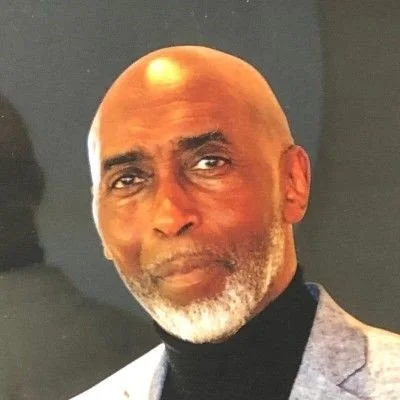
Pushkar Lail
INTERVIEWER: Pushkar, thank you for speaking with me. To begin, can you introduce yourself—where you were born and a little about your family background?
PUSHKAR SINGH LAIL: I was born on 20 November 1935 in Moela Wahid Pur village, in Hoshiarpur district in Punjab, India. My mother was Amar Kaur—her maiden name was Sahota—and my father was Ujagar Singh Lail. I was the second youngest of nine children, although four of my siblings died in infancy.
Early education, Partition, and political atmosphere
INTERVIEWER: What was schooling like in your village?
PUSHKAR: I went to the village school until I was about ten. We learned to read and write in Urdu, with basic maths. It was forbidden to speak Punjabi in school. And even though I was naturally left-handed, teachers forced children to write with the right hand. In those days, girls did not attend school—only a few boys were sent. Among my siblings, I was the only one sent to school.
INTERVIEWER: Why were so few children able to stay in education?
PUSHKAR: Poverty. Villagers were kept illiterate, and children were needed in the fields so there was enough food. Schools charged fees, which made it harder. Government high schools existed mainly in towns, out of reach for village families.
INTERVIEWER: And you continued beyond age ten?
PUSHKAR: Yes. I went to high school in Garh Shankar. I started in April 1947—right at the time of Partition. School broke down after summer because everything was in upheaval, and it didn’t properly restart until late autumn. I saw many friends leave for Pakistan, and refugees arrived from West Punjab. My best friends were two brothers, Nazir and Rafik Ahmad Shah. Their departure, and the whole experience of Partition, was deeply upsetting.
INTERVIEWER: Your father’s politics affected your education too, didn’t it?
PUSHKAR: They did. After independence, because my father had been a freedom fighter and we were poor, my school fees were halved. But by 1951, in ninth class, the fee went up to the full amount. Part of it was the head teacher’s disapproval of my father’s membership of the Communist Party of India. Congress treated the CPI as a threat. My father was imprisoned from 1949 to 1951.
INTERVIEWER: How did you manage to finish school?
PUSHKAR: The deputy head teacher of a private Khalsa school, Iqbal Singh—he was also CPI—offered me a place. It wasn’t as good as the Garh Shankar school, and it was two miles further. It became a ten-mile round trip on foot on a rough track. I had no shoes and poor clothes, but I walked it. Teachers were sympathetic. They told poor children not to feel ashamed but to keep clean—wash clothes ourselves at weekends and not burden our mothers. I completed my last two years and passed in second division. I was third highest in the year, which surprised people given the distance and having no electric light to study by.
INTERVIEWER: Did you go to college after matriculation?
PUSHKAR: My father paid for me to attend a newly built private Khalsa College in Mahalpur—poorly managed, like many private colleges then. I studied maths, science, and English for two years. But before my final exam in 1955, my father took me to help clear new land he had been awarded as a freedom fighter and political sufferer.
Clearing land in Haryana and first working life
INTERVIEWER: What was that land, and what did it mean for your family?
PUSHKAR: After independence, four villages were set up for freedom fighters and their families. Our land—12.5 acres—was in what had been Dhandoor village, about five miles along Sirsa Road from Hisar, Haryana. That area had been deserted since 1857—British forces cleared villages then, likely because of the uprising. After a hundred years it was completely overgrown. A new canal arrived from the Bhakhra Dam to irrigate and generate power, but living conditions were still very hard at first—no drinking water, no facilities.
INTERVIEWER: What was daily life like during that period?
PUSHKAR: My father and I built a straw-roofed shelter. We had one buffalo and two oxen. Milk became our main source of vitamins. I had to learn to cook chapati and dal—I’d never cooked for myself before. Drinking water came from dirty ponds where animals drank and relieved themselves. We used a simple settling method—put water in a clay pot and let dirt settle. When canal water ran clean, we drank and bathed there, but it didn’t run all the time.
The land was dry scrub—thorny bushes—with deer, lizards, many rat burrows, and lots of snakes, mostly cobras. I used to tell my father, “If the cobras don’t get me, cholera will.” We worked from dawn clearing bushes and roots. The land was fertile because it had been farmed long ago and then left fallow. The district was hot and prone to dust storms.
INTERVIEWER: Did it improve?
PUSHKAR: Yes. After the first autumn the harvest was abundant. We could sell enough to afford a second buffalo. By late 1955 my older brother Raghbir Singh came, saw the canal and crops, and decided to move there with his family. Then my father said I could return to college.
INTERVIEWER: You returned to study in Hisar?
PUSHKAR: I went to Government College in Hisar. I lived at the farm and cycled to college. I applied for a government job before finishing my studies. I sat a written test in the new government buildings in Chandigarh and met old schoolfriends there. I was successful and started work as a civil servant in Hisar district.
INTERVIEWER: What kind of work did you do?
PUSHKAR: It involved challenging caste prejudice in rural backward areas—like prohibitions on “untouchables” drawing water from certain wells. Meanwhile my father stood in local elections, became head of the four villages, set up a government school—now a high school with sixth form—and established a drinking water pond for people when the canal wasn’t running.
INTERVIEWER: Your family’s political history goes back further—especially your grandfather.
PUSHKAR: My paternal grandfather, Mangal Singh—born around 1885—went in his twenties to western Canada as a labourer building railways. There were six brothers, so inheritance land was shrinking. He lived in an extended family and sent money home. He could afford to send my father, Ujagar Singh, to boarding school until he was 18—Matric High School in Bujwarha, near Hoshiarpur. That was the only matric school in the district.
INTERVIEWER: How did your grandfather become politicised?
PUSHKAR: In Canada he faced severe racism and terrible living and working conditions. He was very religious and went to gurdwaras where workers discussed these conditions. They were exposed to political teachings connected to Lala Hardyal and Ghadar Gunj—“The Voice of Revolt”—San Francisco. Men like my grandfather were often illiterate, but in gurdwaras they debated politics. They were taunted that Indians didn’t even have a flag. The message was: don’t live like slaves in Canada—return to India and join the independence struggle. My grandfather returned to Punjab in 1913 after six or seven years.
INTERVIEWER: And other men from your village were involved too?
PUSHKAR: Yes. Pandit Salig Ram and Jathedar Partap Singh also went to Canada. Partap Singh returned earlier and later led the Gurdwara Sudhar Movement in the 1920s—challenging hereditary mahants who controlled gurdwaras’ land and donations. The Akalis said gurdwaras belonged to the community. The British refused the legal change, and conflict escalated.
INTERVIEWER: Your father was involved directly?
PUSHKAR: He joined the movement around age 18. At that time he wasn’t part of Gandhi’s non-violent movement—he was involved in physical confrontations with British soldiers. He joined a 24-day occupation at Anandpur gurdwara to remove the mahant. The British eventually conceded, but he was imprisoned in 1922 for violence—his first imprisonment. Later he was involved in Guru ka Bagh and then Jai Ton da Morcha—each leading to further imprisonment. By then the British recognised him as a violent agitator—one person’s terrorist is another’s freedom fighter.
INTERVIEWER: How did he move into socialist politics?
PUSHKAR: There was Bhai Santokh Singh who returned from abroad and set up the Kirti Party—socialist. Many who’d been in the gurdwara agitation joined. My father concluded the struggle was between rich and poor, and that the exploitation of the poor was central. The British feared sympathy with the USSR and banned Kirti. Many Kirti members entered Congress, forming its left wing aligned with Subhas Chandra Bose. Within Congress my father joined non-violent struggle. Over time he became convinced the central problem wasn’t religion—it was inequality and exploitation. He worried about what India would become after independence: rule by an Indian rich elite, or a society where ordinary workers had equal power.
INTERVIEWER: How did that shape you?
PUSHKAR: His view was: if you are not involved, you cannot bring change. That stayed with me.
Coming to Britain and early observations
INTERVIEWER: When did you come to Britain?
PUSHKAR: I came in 1962. Britain after the Second World War needed workers—transport, hospitals. Commonwealth citizens were invited, but there wasn’t proper provision for housing or support, and many migrants arrived from societies where colonialism had limited education. There was a gap between what the country needed from workers and what it provided in terms of dignity and infrastructure.
INTERVIEWER: Can you talk through your trade union history?
PUSHKAR: I first worked at Raleigh Industries in Nottingham and joined the Metal Mechanics Union, later MSF. Soon after, there was industrial action on wages and conditions. I was active on the picket line and encouraged other Asian workers not to break the strike.
After two years Raleigh shed employees, so I moved to Nottingham City Transport as a bus conductor. That’s when I joined the Transport and General Workers’ Union—November 1964. I stayed active at workplace, district, regional, and national levels. I became a delegate to Nottingham and District Trades Council and to the Community Relations Council—now the Race Equality Council—and served on both executives.
INTERVIEWER: One of the defining incidents you describe is the 1975 Minsk trip.
PUSHKAR: Yes. In 1975 I was sponsored by the T&GWU as part of a six-person Trades Council delegation to Nottingham’s twin city Minsk—then in the USSR. Returning to Britain, I had an immigration problem. The officer wanted proof I was legally settled and refused the evidence and explanations from other delegates. I knew other Black people experienced harassment at immigration. He stamped my passport with only three months’ permission to stay.
INTERVIEWER: How did you respond?
PUSHKAR: First I took it to the press—front page of the Guardian and other papers. Then I wrote through the union branch to Jack Jones. T&G-sponsored MPs raised questions in the House of Commons. Jack Jones instructed the full-time officer to raise it with Immigration at Heathrow. Michael English MP took it to the Ombudsman. The Home Secretary was Roy Jenkins; the Immigration Minister Alex Lyon. They found harassment by some immigration officers and racist attitudes; the minister apologised publicly and in writing. The Ombudsman, however, said the officer hadn’t acted improperly and argued I should have brought my original passport. A local MP advised me to take British nationality, which I eventually did under the 1981 Act.
INTERVIEWER: Beyond this, what other campaigns were central?
PUSHKAR: We affiliated our branch to the Anti-Apartheid Movement, and organised coach trips to national demonstrations. I was a founder member of the Nottingham Anti-Nazi League. When the National Front opened its East Midlands headquarters in High Pavement, we built a massive demonstration—churches, students, unions, general public, national speakers. The campaign drove them out. I attended a national conference through Trades Council.
I also supported women workers. In the 1970s women on City Transport crews were employed only as conductors. After the 1975 Sex Discrimination Act, they should have been able to become drivers. Many male drivers didn’t like it. I argued in favour, and the branch held a mass meeting in the Co-op Rainbow Rooms—now Broadway Cinema—to change local policy.
INTERVIEWER: You were a shop steward for a decade too?
PUSHKAR: Ten years in the 1970s and 1980s. We fought for things like free bus passes for employees—management delayed it for years until Labour took control of the council and agreed. We struggled over “Deviation Bonus,” involving local industrial action.
When One Man Operation was introduced, I opposed it because it meant job losses and arguably a worse service. OMO drivers were paid more, but when put on other duties their rate dropped. I argued successfully for the higher rate to apply at all times.
Another change I proposed was holiday amalgamation—so workers visiting family abroad could take a longer break and make the cost and travel worthwhile.
INTERVIEWER: Equal opportunities became a major focus.
PUSHKAR: Yes. I pushed equal opportunities in recruitment and promotion in City Transport. I proposed the branch affiliate to Nottingham and District Community Relations Council and served on its executive. I helped develop a Trade Union Consultative Group on Equal Opportunities and negotiated an equal opportunities policy, including a monitoring unit for council departments.
I attended the TUC’s first Black Workers meeting in London—before the TUC had a Race Relations Committee. I was a delegate to many conferences: TUC in Brighton; Labour Central Region in Skegness; TUC Race Relations in Blackpool; Amnesty in Salford; T&G National Race Advisory Committee. I supported solidarity actions—Miners, Teachers, and international struggles such as Chile and Vietnam.
Political education and anti-racist training
INTERVIEWER: Where did your political education in the UK come from?
PUSHKAR: Some came through formal courses—Community Relations Council events in the 1970s and 80s, T&G education, and the Trade Union Consultative Group. Training helped me learn how to argue effectively for equal opportunities within employers and public services. It complemented daily experience of discrimination and reinforced the need to counter it.
Nottingham City Council: pushing structural change
INTERVIEWER: Can you describe what you saw in Nottingham City Council by the 1980s?
PUSHKAR: National equal opportunities legislation arrived mid-1970s, but by the 1980s it wasn’t being implemented properly. Black employees existed in significant numbers mainly on the buses or in menial jobs. Many departments were all-white and senior officers were white, mostly men.
I asked the CRC to act; they suggested I use union influence. The Trades Council set up a Consultative Group on Equal Opportunities, with me among the founding members. It included feminists, disability campaigners, and gay rights activists. It was voluntary—no paid staff. We produced a policy paper: equal opportunities in recruitment, promotion, and council services, and a three-person monitoring group with research capacity.
To strengthen local pressure, we set up an Afro-Caribbean and Asian Forum to lobby for adoption. The council adopted the recommendations fully.
INTERVIEWER: And then political control shifted.
PUSHKAR: When Labour lost local elections in the late 1980s and Tories took control, they claimed there was no discrimination and removed the equal opportunities policy and monitoring group. It took Labour returning to re-implement. There was also a by-election in Byron Ward. Betty Higgins phoned me to mobilise South Asian voters; Labour won, leading to a hung council with casting vote held by John Peck—formerly Communist, then Green—someone I knew well.
Overall, the policy helped: Black people were recruited into departments where they had not been; women and other under-represented groups were promoted; black inspectors were appointed in City Transport. For me, activism was done while working double shifts and raising a family—implementation had to be carried forward by others. Equal opportunities needs sustained pressure.
INTERVIEWER: You received recognition after retirement.
PUSHKAR: After retiring from the buses I received the T&G Gold Medal “in appreciation of loyal and devoted service,” presented in April 2002 by the General Secretary Bill Morris—now Baron Morris of Handsworth.
Indian Workers’ Association: mutual aid and political organising
INTERVIEWER: When did you become involved in the Indian Workers’ Association?
PUSHKAR: In Nottingham in 1963. I became involved because I could write English. I helped people fill forms—welfare, immigration—and write letters home, send money at the post office, and read replies. Many couldn’t read or write in any language. Comrade Chenchil Singh and Comrade Rattan Singh Sandhu asked me to join.
The IWA was dominated by left political thinkers, with connections to the CPI; many UK members were in the Communist Party of Great Britain. I joined the CPGB around the same time.
INTERVIEWER: The CPI split affected the IWA too.
PUSHKAR: It did. After the India–China war, the CPI split and similar tensions appeared in the IWA. Herkishan Singh Surjit came from India to address members in Birmingham, arguing for CPI(M) positions and for recognition internationally. But in Nottingham we stayed united. Where there were common causes—like opposing racist immigration laws—we acted together.
I became General Secretary of IWA Nottingham in the early 1970s. We focused on UK issues: racism, immigration, sometimes anti-apartheid, and solidarity with trade union struggles like May Day. When Indira Gandhi imposed Emergency laws, the IWA took a stance on Indian politics and held a public meeting at the Rainbow Rooms opposing the suspension of democracy.
INTERVIEWER: You were removed as secretary later.
PUSHKAR: In the early 1980s I was removed due to a dispute with the IWA UK National General Secretary, Gurnam Singh Sanghera, who wanted the Nottingham branch to align more clearly with CPI(M). I deliberately avoided taking sides; our focus was local struggle in Nottingham and the UK. The Nottingham executive supported me, but the central committee removed me. The minutes and correspondence from my period were passed to my successor.
Founding the Indian Community Centre
INTERVIEWER: The Indian Community Centre is another major part of your legacy. How did it begin?
PUSHKAR: Early on, as IWA Secretary I hired rooms at the International Community Centre to help people with welfare and immigration forms. Then I initiated setting up Nottingham’s Indian Community Centre. I launched an application to Nottingham City Council on 18 August 1975. The City Secretary was Michael Tebbit.
Senior Community Relations officer Terrence McCann told me Home Office Urban Aid funding was available. Three applications were made: Indian, Afro-Caribbean, and Pakistani. The Labour-controlled council recommended all to the Home Office and agreed to provide 25% match funding.
Then in May 1976, the Tories won control. They cancelled Pakistan Friends League funding, and that group bought their building through fundraising. Afro-Caribbean funding was lost, and the IWA application was targeted because councillors were told the IWA was full of communists.
David Purdey—who replaced Terrence McCann—advised me to bring some Indian Tories to negotiations to help secure the grant. We did, and argued it would be a community centre, not a political centre: weddings, cultural events, advice. We originally requested £62,000 including running costs, but the Tory leader Jack Green agreed only to fund purchase, not running costs—on condition it was bought in the same financial year.
INTERVIEWER: What building did you buy?
PUSHKAR: In 1976 we bought a dilapidated Baptist Chapel on Rawson Street, Basford. The church would only sell if it remained a community centre, not a religious organisation. There were disputes within the Indian community about control. The City Secretary ended those by stating only one application existed—the IWA Nottingham one with my home address—so it was clear who held the mandate.
Membership was open: people of Indian background could be full members; anyone could be an associate member. A management committee was elected by members. I served about eight years and left in the early 1990s due to time pressures, especially my involvement in the union’s race committee. Later I joined the “Union Group” within the centre: secular, anti-racist, anti-sectarian, no platform for extremism. The Union Group won control in 2001; I became treasurer.
INTERVIEWER: What services did the centre provide?
PUSHKAR: A major service was facilitating Indian visa applications. The High Commission sent staff to the centre for sessions; people came from Leeds and Liverpool. When the system was outsourced, volunteers—especially Dial Basi—continued form-filling and bulk processing with Birmingham.
Welfare rights advice continued. After retirement I did a course; later a County Hall worker took over some of that. I volunteered with Victim Support for a few years.
In 2007 the centre relocated to 99 Hucknall Road with funding from city and county councils, Greater Nottingham Partnership, the East Midlands Development Agency with EU-linked regional development funds, New Deal, the sale of the old building, and many donations including the Puri Foundation.
It became widely used: not only Indian groups but Kurdish, Turkish, Iranian events; council, police, health services training days; weddings; festivals; over-50s club; exercise; children’s dance; sports clubs; day care; Dosti luncheon club; conferences; and exhibition space for artists.
The Thatcher years and policing
INTERVIEWER: How do you characterise the Thatcher period?
PUSHKAR: It brought anti-trade union laws, stricter immigration rules, privatisation, and rhetoric that fed racism—talk of being “swamped” and “aliens.” Spouse migration became harder. Unemployment rose and racist attacks increased; immigrants and Black and minority communities were scapegoated. Trade unions were hamstrung early, reducing opposition to attacks on workers.
The Scarman Report after the 1981 uprisings pushed police to link more closely with Black and Asian community groups. I was invited to meetings with Nottinghamshire Police in my capacity across union and community organisations.
Casework: three examples of discrimination
INTERVIEWER: You handled many discrimination cases. Can you share three examples?
PUSHKAR: First was my own immigration case after Minsk.
Second was in 1977: a woman at Player’s Tobacco in Radford. She returned from India one day late because her flight was delayed, and received a P45 the next morning. Legally, an employee must be absent without leave for three days before action. I went to the union secretary and the company industrial relations officer. They told me they had appealed. Then the union secretary waited until after the three-month tribunal limit and phoned me to say it failed. I asked for it in writing. It became clear the union secretary and management were working together to run down the clock.
The woman agreed—bravely—that I could take it forward. Citizens Advice took it to tribunal. It was agreed the decision was deliberately delayed past the deadline. She won and was awarded £1400. She didn’t seek re-employment because she expected poor treatment, and stayed with her new job at Boots.
The third case was Mr Janak Singh Sanghera, who wore a turban. He applied to Nottingham City Transport and was rejected. Uniform rules had previously barred beards and turbans, but the national law had changed—he should have been allowed. I found out he performed very well in the driving assessment. Personnel refused to show the interview file, breaking an agreement with the union. I took it to the union secretary Harry Ball and demanded a meeting with the General Manager. I also told the General Manager I could involve the Commission for Racial Equality. After taking advice, the General Manager told me to leave it with him and he wrote offering Sanghera a job. Sanghera became one of the best drivers and active in social and athletic societies.
Committees, roles, and political engagement
INTERVIEWER: You’ve served on many committees. Can you summarise the main ones?
PUSHKAR: Transport and General Workers’ Union 592 Branch Committee; shop steward at Parliament Street Depot for ten years; delegate and executive member at Nottingham and District Trades Council; district and regional union committees; national race advisory and later constitutional committees; Indian Workers’ Association executive and secretary for ten years; Community Relations Council delegate and executive; CRC Employment Committee; trade union consultative committee negotiating equal opportunities and monitoring; Afro-Caribbean/Asian Forum; founder and management committee member of the Indian Community Centre; Victim Support volunteer. I also stood as a Labour candidate in 1991 in Robin Hood Ward but was unsuccessful.
Concluding reflections
INTERVIEWER: Looking back, what changes have you seen, and what do you feel matters now?
PUSHKAR: Britain has changed a lot since migration in the late 1950s and 1960s. Legislation outlawing discrimination made a difference to rights and expectations. But attitudes are complicated—subjective, with hidden factors.
Younger generations are in different circumstances, and the cultures of the countries our families came from have changed too. No one can simply “go back.” Each generation must adjust to life in Britain and avoid isolation. Integration is essential to get rid of racism and discrimination. Older generations should encourage the young to take an active interest in public issues so they feel confident to take part in politics and decision-making at all levels.